Translate

U.S. Navy Next Generation Destroyer Zumwalt (DDG 1000) Headed to Sea for Trials


The future USS Zumwalt (DDG 1000) sailed out of General Dynamics-Bath Iron Works shipyard in Bath, Maine, yesteday for the very first trials (called builder trials). Zumwalt is the largest destroyer ever built for the U.S Navy. This initial builder sea trials will help check basic systems onboard as well as the seaworthiness of the inverse bow design.

The Zumwalt-class destroyer represents the next-generation of multi-mission surface combatants and will enable access in the open ocean, littoral and ashore. The Navy has procured three Zumwalt-class destroyers.

The ship includes new technologies that deliver capability now and serve as a springboard for incorporation into future ship classes. DDG 1000 is the first U.S. Navy surface combatant to employ an innovative and highly survivable Integrated Power System which will provide power to propulsion, ship's service, and combat system loads from the same gas turbine prime movers. DDG 1000's power allocation flexibility allows for potentially significant energy savings and is well-suited to enable future high energy weapons and sensors.

As the prime mission systems integrator for the DDG 1000 ship class, Raytheon provides the multi-mission, integrated combat system capability for the program. General Dynamics-Bath Iron Works is the shipbuilder.

The ship features two advanced gun systems firing long-range land attack projectiles that reach up to 63 nautical miles, providing precision, high volume and persistent fire support to forces ashore, along with an approximate five-fold improvement in naval surface fire range. DDG 1000 will employ active and passive sensors and a multi-function radar capable of conducting area air surveillance, including over-land, throughout the extremely difficult and cluttered sea-land interface.

source

India and Russia close to sign deal for Ka-226T multirole helicopters

India intends to purchase Russian Ka-226T multirole helicopters, after which discussions will be held about their joint production in one of the South Asian republics, says an official report received by the Russian news agency TASS from the Indian Defense Ministry.

"The Defense Procurement Council of India has approved the request for acquisition and subsequent coproduction of Ka-226T helicopters for the ground troops and air forces of India," the Defense Ministry specified. The number of helicopters India plans to acquire is not disclosed, but a TASS source, close to the Indian AF, mentioned "a possible initial order of roughly 50 machines."

"Initially it could be a total of 200 Ka-226T helicopters, including those acquired "off-the-shelf" and co-produced in India," he pointed out.

A proposal for co-production of Ka-226T was first discussed at the meeting between Indian Prime Minister Narendra Modi and Russian President Vladimir Putin during his visit to New Delhi in December 2014. Back then the sides noted that the joint company could produce helicopters, including for export to third countries.

In late August 2015 a trilateral agreement was signed between Russia’s companies The Russian Helicopters and Rosoboronexport and their Indian partner, the private company Reliance Defense, for co-production of 200 Ka-226s. Appointed as the leading integrator of licensed production with the technology transfer from Russia was the Reliance Helicopters Joint Venture in which the Reliance is to get 51% of shares with the remaining 49% going to the Russian side.

The terms of the contract envision the transfer of all Ka-226T manufacture technologies to the Indian side and the production of at least half of the helicopters from the Indian-manufactured components.

source

China's New Anti-Stealth Radar Material: Technology Could Make Jets, Ships Harder To Detect

China's Chengdu J-20 Stealth Fighter
An aircraft that is reported to be a Chinese stealth fighter is seen in Chengdu, Sichuan province, in this picture taken Jan. 7, 2011. Reuters/Kyodo
Chinese scientists have created a special material that could make stealth jets and ships even harder to detect by using current anti-stealth radar. While stealth materials already exist that effectively can absorb most of the specialized microwaves that are fired into the sky by radars to detect aircraft, it has always been too thick and heavy for modern jets to carry, a report published Thursday in the Journal of Applied Physics said.
Now, scientists in China have developed a far thinner and lighter stealth material. “Our proposed absorber is almost 10 times thinner than conventional ones,” Wenhua Xu, one of the team members from China’s Huazhong University of Science and Technology, said in the report.
The new technology demonstrates how China is rapidly catching up in an area of defense the U.S. traditionally has dominated. 
It’s not yet clear if the Chinese military has adopted the technology on its two stealth jets already in production, the Chengdu J-20 and the Shenyang J-31, or if it will attempt to advance the technology in the future to be even more
effective.
If it does, the capability of the Chinese military in the air and at sea will be increased dramatically and help close the technology gap between Beijing and the Pentagon. It could be argued that varying degrees of stealth technology enabled the U.S. military to dominate in the last century, stopping most technological gains by its Soviet enemy during that time.
“In the 1970s, Secretary of Defense Harold Brown, working closely with Undersecretary -- and future Defense Secretary -- Bill Perry, shepherded their own offset strategy, establishing the Long-Range Research and Development Planning Program that helped develop and field revolutionary new systems, such as extended-range precision-guided munitions, stealth aircraft, and new intelligence, surveillance, and reconnaissance platforms,” former Defense Secretary Chuck Hagel said at a November 2014 event outlining the Pentagon’s newest technological push.
The result of the offset strategy was the Lockheed Martin F-35, long touted as the stealthiest fighter in production. However, in 2009, China was reported to have hacked into U.S. defense computers and stolen design and electronic data on the program, Reuters reported. While China denied the hack, both its most recent jets look nearly identical to the F-35.
source


The tests confirming the flight characteristics of Russia’s fifth-generation PAK FA (Prospective Airborne Complex of Frontline Aviation) fighter jet have been actually completed, Deputy Defense Minister Yuri Borisov said in an interview with Rossiya 24 TV Channel on Monday.
“Several planes are now primarily testing airborne avionics. The tests proving the aircraft’s flight characteristics have practically been completed,” the deputy defense minister said.
Deputy Defense Minister Borisov earlier told the media the Russian military would purchase only a squadron of PAK FA fighter jets, compensating this with a larger order for Sukhoi Su-35 (NATO reporting name: Flanker-E) fighters.
The Sukhoi PAK FA (Prospective Airborne Complex of Frontline Aviation) is a fifth-generation fighter program of the Russian Air Force. The T-50 is the name of the prototype aircraft designed by Sukhoi for the PAK FA program. The aircraft is a stealthy, single-seat, twin-engine jet fighter, and will be the first operational aircraft in Russian service to use stealth technology. It is a multipurpose fighter designed for the air superiority and attack roles. The fighter is planned to have super-cruise, stealth, super-manoeuvrability and advanced avionics to overcome the prior generation of fighter aircraft as well as ground and maritime defences.
The PAK FA is intended to be the successor to the MiG-29 and Su-27 in the Russian Air Force and serve as the basis for the Fifth Generation Fighter Aircraft being co-developed by Sukhoi and Hindustan Aeronautics Limited (HAL) for the Indian Air Force. PAK FA fighter first flew in 2010.

source

Russia Loses Advanced Military Satellite After Launch

A Russian Soyuz-2.1v rocket launches two satellites on Dec. 5, 2015
MOSCOW — Russia has lost communication with a newly developed military satellite after it apparently failed to separate from the booster rocket after its launch, a source in the country’s air and space forces told TASS state news agency on Monday.
“The spacecraft ... is recognized as lost since it is impossible to use it according to its purpose,” the source said, adding that a repeat attempt to separate the satellite from the upper-stage rocket was unsuccessful.
A Soyuz-2.1B rocket carrying two satellites blasted off from Plesetsk cosmodrome on Saturday.
On Sunday, RIA Novosti state news agency reported that one of the two satellites had apparently not separated from the upper-stage rocket, citing a source in the space industry.
The lost satellite called Kanopus-ST, named after the star Canopus, is both for civilian and military use, reported Kommersant business daily, citing sources in the space industry.
It was developed to scan the Earth’s oceans and weather systems from space including spotting submarines for the military. The satellite took 10 years to develop and was considered highly promising.
A member of the commission set up to investigate the incident told Kommersant that the problem appeared to be with the attachment of the upper-stage rocket to the satellite, which did not open up on time.
The satellite will fall back to Earth and burn up in the atmosphere in the next two or three days, a source told Kommersant.
Moscow has not yet officially commented on the space incident.
Russia has lost a number of costly satellites, which it launches commercially for other countries as well as for its own needs. Most recently it lost a Mexican satellite in May.
In 2014, a Russian rocket carrying its most advanced communication satellite to date fell back to Earth in a blow to the space industry.
In 2013, a Russian Rocket carrying three Russian-made Glonass navigation satellites also failed.
 

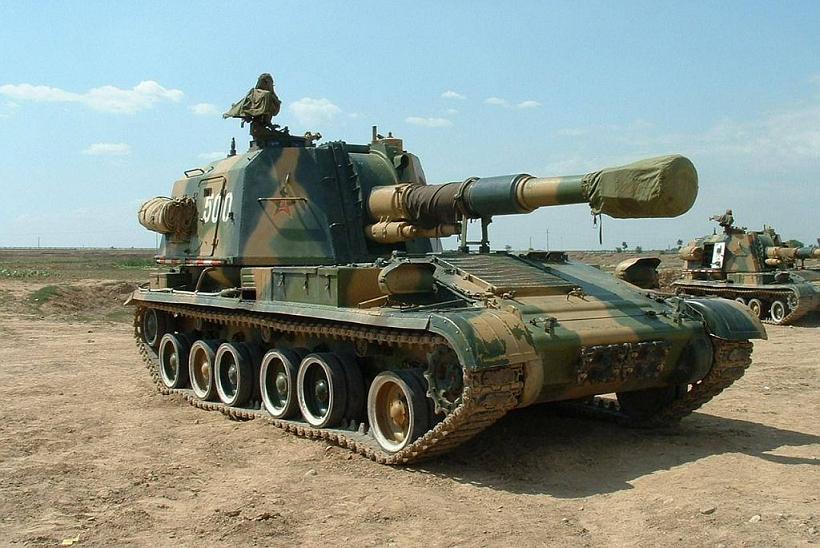
PLZ04/05 155mm Self Propelled Howitzers update.

In a series of photos and CCTV reports released by the PLA (here) recently, it appears that they have significantly upgraded the fire power of their infantry divisions belonging to the Nanjing Military Region with PLZ04/05 155mm Self Propelled Howitzers.

The PLZ04/05 is the pride of the PLA artillery, capable of firing guided rounds to a maximum range of 100KM, a major jump over their old 152mm PLZ83 (D20 based) workhorse.    Together with other supporting arms of the PLA, a PLZ04/05 Abteilung consists of 6 tubes in a 18-gun battalion, organic to the divisional headquarters.   Additionally, more PLZ04/05 tubes are available to the Nanjing MR from its1st Artillery Division. 1st Group Army.


91st Amphibious Infantry Division, 31st Group Army traded in their old PLZ83 152mm SPH for the new PLZ05.


PLZ83

2nd PLZ05 Battalion belonging to the Artillery Regiment,  1st Amphibious Mechanized Infantry Division, 1st Group Army, confirmed.   The 1st Amphibious Mechanized Infantry Division now enjoys the firepower of 36 PLZ05 tubes, a first for a PLA infantry division.


source

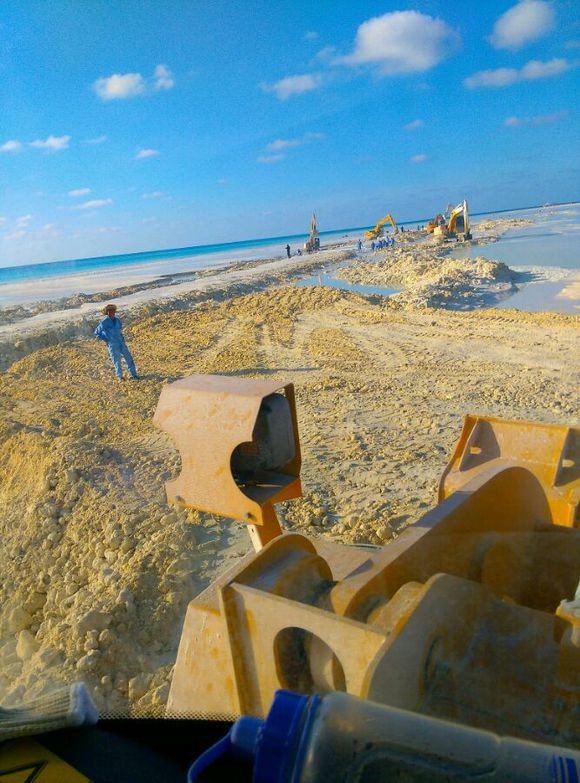
Photo of certain construction site at South China Sea. 

 China has been rapidly piling sand onto reefs in the South China Sea, creating seven new islets in the region. It is straining geopolitical tensions that were already taut.

The speed and scale of China’s island-building spree have alarmed other countries with interests in the region. China announced in June that the creation of islands — moving sediment from the seafloor to a reef — would soon be completed. Since then, China has focused its efforts on construction. So far it has constructed port facilities, military buildings and an airstrip on the islands, with recent imagery showing evidence of two more airstrips under construction. The installations bolster China’s foothold in the Spratly Islands, a disputed scattering of reefs and islands in the South China Sea more than 500 miles from the Chinese mainland. China’s activity in the Spratlys is a major point of contention between China and the United States and was a primary topic of discussion between President Obama and President Xi Jinping of China during the Chinese president’s visit to the White House in September. On Monday, the United States sent a Navy destroyer near the islands, entering the disputed waters.


\

 source